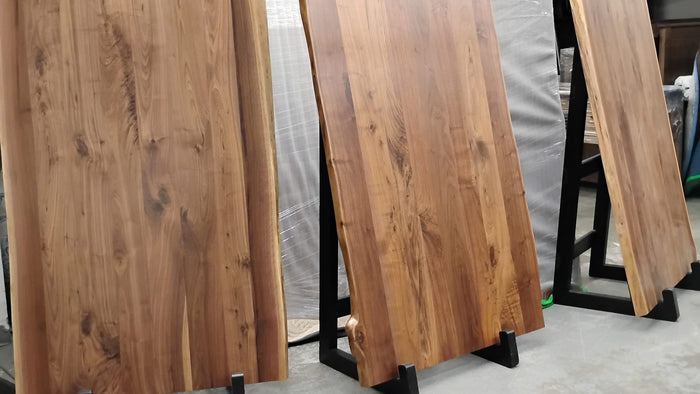
Amish Stain Colors: A Visual Guide to Furniture Wood Stains
 By Michael King, Owner

Furniture wood stain colors run from clear, natural tones through golden, medium and red-brown shades to dark browns, grays and near black. Most stains named on our product pages are Ohio Certified Stains (OCS), with names like Michael's Cherry, Asbury and Fruitwood. The same stain looks different on each wood, so compare real samples on the wood you plan to buy.
Key takeaways
- Think in color families first: light and natural, golden, medium brown, red-brown, dark brown, gray, and near black. Then pick a stain inside the family.
- OCS is a shared stain system that woodworking business owners in Holmes County, Ohio set up so the same color can match from one craftsman to the next.
- Michael's Cherry is the stain named most often on our product pages (242 of 3,546), followed by Asbury (131).
- The wood changes the color. Hickory stays fairly neutral, Brown Maple does better with medium and dark finishes, and cherry darkens with light over time.
- Screens can't show a finish well. Order up to 3 free stain samples and look at them in your own room light.
What are Amish stain colors?
A stain is the color that goes into the wood before the clear top coat. The USDA Forest Products Laboratory explains that stains "accentuate wood grain by absorbing differently" into the different parts of each board, and that they penetrate only slightly, so the stained surface needs a clear coating on top.
When people say "Amish stain colors," they usually mean the named stains used by Amish furniture shops. On our site, most of those names carry an OCS code, such as OCS 113 Michael's Cherry or OCS 117 Asbury. OCS stands for Ohio Certified Stains.
According to the Ohio Certified Stains profile, the system began when a group of small business owners in Holmes County, Ohio, decided there had to be a better way to manage stain colors. They compared a large collection of stain wipes against the original colors and set one standard for each. The goal is simple: a stain ordered from two different craftsmen should match. The profile says a trained employee still checks the shops' stain wipes against the originals every month.
That helps when a table comes from one builder and the chairs from another. Wood is still natural, so two boards in the same stain can differ a little. If pieces need to match, tell our team when you order.

Furniture wood stain colors: a chart by color family
Our stain samples page shows each OCS stain on six woods: Brown Maple, Red Oak, Cherry, Hickory, Quarter Sawn White Oak (QSWO) and Flat Sawn White Oak (FSWO). The chart below groups those stains by how they look on the Brown Maple samples. The counts in the last column come from the "Shown with" details on our product pages.
| Color family | Stains on our samples page | What our product pages show |
|---|---|---|
| Light and natural | OCS 100 Natural, OCS 137 Lace, OCS 138 Latte | Latte is shown on 19 pages, often on Plain Sawn White Oak. |
| Golden and light brown | OCS 101 S-2, OCS 103 MX, OCS 104 Seely, OCS 139 Canyon | Seely is shown on 56 pages, most often on Red Oak and Brown Maple. |
| Medium brown | OCS 102 Fruitwood, OCS 110 Medium, OCS 112 Provincial, OCS 119 Cappuccino | Fruitwood (65 pages) is shown mostly on Oak. Cappuccino (60) is common on Rustic Cherry. |
| Warm red-brown | OCS 107 Washington, OCS 111 Boston, OCS 113 Michael's Cherry, OCS 116 Harvest | Michael's Cherry is on 242 pages, more than any other stain, often on Rustic QSWO and Rustic Cherry. |
| Dark brown | OCS 106 Acres, OCS 117 Asbury, OCS 122 Cocoa, OCS 226 Coffee, OCS 227 Rich Cherry, OCS 228 Rich Tobacco | Asbury (131 pages) is shown most on Brown Maple. Rich Tobacco is on 51. |
| Gray and weathered | OCS 132 Sand, OCS 133 Tundra, OCS 135 Driftwood, OCS 121 Smoke, OCS 118 Antique Slate, OCS 136 Greystone | Smoke (57 pages) and Antique Slate (51) are the grays we show most. |
| Near black | OCS 230 Onyx, OCS 231 Colombian | Onyx is shown on 20 pages, mostly on Brown Maple. |
The groups are a starting point, not a rule. A stain can read warmer on Red Oak than on Hickory, which is why the samples page lets you switch between woods.

How does the wood change the stain color?
The same can of stain will not look the same on every wood. Each species starts with its own color and grain, and the stain sits on top of that. Choosing the wood is really the first step toward choosing the stain. Here is how our wood guide describes the woods on our samples page.
| Wood | Hardness (from our wood guide) | How it takes stain |
|---|---|---|
| Hickory | Hardest and heaviest of our options | Varies in darkness but stays fairly neutral, so it works with both warm and cool stain colors. |
| Quarter Sawn White Oak | Second hardest | Neutral, with small stripes in the grain. Some find it slightly warmer than hickory. |
| Red Oak | Middle of the range | Slightly warmer in tone than QSWO, with a strong arch-shaped grain seen in many traditional styles. |
| Brown Maple | Softer hardwood | Lighter wood that brings out the pigment range of stains. Mineral streaks can look gray, so it does better with medium and dark finishes. |
| Cherry | Same as Brown Maple | Very smooth grain with a noticeably red or pink undertone. |
Why grain shows more on oak
Every growth ring has a softer, more open part and a denser part. The Forest Products Laboratory notes that stains color the softer part more than the dense part. On woods with bold rings, like oak, that makes the grain pattern pop. On smooth woods, like maple and cherry, the color looks more even.
Cherry gets darker with time
Purdue Extension says cherry "darkens substantially with exposure to light." It gives the example of paneling where pictures hung for a few years left lighter patches behind. If you choose cherry, expect it to deepen, and move lamps and decor now and then in the early years so it darkens evenly.
Which Amish stain colors are most popular?
We can't count what every customer orders here, but we can count what our builders chose to show. We read the "Shown with" details on all 3,546 active product pages on our site in November 2026. 1,580 of them name the stain in the photo, and 1,019 of those use one of the OCS stain names on our samples page.
- Michael's Cherry: 242 pages. The most common pairings are Rustic Quarter Sawn White Oak, as on the Mission Bookcase, and Rustic Cherry.
- Asbury: 131 pages, most often on Brown Maple, as on the Murphy Rolltop Desk.
- Fruitwood: 65 pages, mostly on Oak, like the Sierra Classic 65'' Dresser.
- Cappuccino: 60 pages, often on Rustic Cherry, like the Albany High Dresser.
- Smoke and Antique Slate: 57 and 51 pages. The Zane Small Dresser is shown in Brown Maple with Antique Slate.
Some pages pair a stain with a glaze. 48 product pages list one, such as "Antique Slate and Black Glaze" or "Michael's with Black Glaze." Ask our team to show you a glazed sample next to the plain stain before you decide.

How do you choose a stain color for a wood table or bedroom set?
1. Start with the light in your room
As our samples page puts it, lighting, paint colors and even the time of day can change how a stain looks in your home. A room with little daylight can feel heavier with very dark pieces, while brighter rooms carry dark stains more easily. Look at your samples in the morning, at midday and with the lamps on at night.
2. Choose warm or cool
Warm stain colors lean red, orange or gold: think Michael's Cherry, Washington, Harvest or S-2. Cool colors lean gray: Smoke, Driftwood, Antique Slate and Greystone. If your floors, cabinets or walls already lean one way, a stain in the same family usually feels calm, and a contrast feels bolder. Hickory is a good fit if you can't decide, since our wood guide says it works with both warm and cool colors.
3. Think about the piece and how you use it
Our wood guide notes that hickory has been a popular wood for dining tables and other furniture that gets frequent use. On Brown Maple, lean toward medium and dark stains. For a statement piece, the grain of oak or the deepening color of cherry may matter more than the exact shade.
4. Compare real samples, not screens
Phones and monitors can't capture the depth of a real finish. Our samples page offers up to 3 free stain samples with free shipping, so you can hold them next to your floor, your cabinets or a piece you already own. You can also line up your picks with the Side by Side tool before you order.

Can you choose the stain for your own piece?
Yes. Most of our furniture is made to order, so you choose the wood and the stain for your piece instead of picking from what is in a warehouse. The photo on each product page shows one example. Many of our pieces can be ordered in a different wood and stain than the one in the photo.
To see the finishes in person, visit one of our showrooms in Intercourse, PA (13 Center Street), Lancaster, PA (2460 Lincoln Highway) or Murrells Inlet, SC (12052 Hwy 17 Bypass N). Hours and directions are on our locations page. If you are still deciding on the wood itself, our guide to solid wood vs veneer vs MDF explains what to look for under the finish.
Pieces shown in popular stains
 Mission Bookcase
 Sierra Classic 65'' Dresser
 Albany High Dresser
 Zane Small Dresser
See more stains on real pieces across all our furniture, where each product page lists the wood and stain shown in the photo.
Frequently asked questions
What is the most popular Amish stain color?
On our own product pages, Michael's Cherry is named most often, on 242 of 3,546 pages, followed by Asbury on 131. That reflects what our builders chose to show in their photos, not every order.
What does OCS mean on a stain name?
OCS stands for Ohio Certified Stains, a shared stain system started by woodworking business owners in Holmes County, Ohio. Each color has one standard, so a stain from two different craftsmen is meant to match. The number, such as 113, identifies the color.
Does cherry wood get darker over time?
Yes. Purdue Extension says cherry darkens substantially with exposure to light. A cherry piece will deepen in color, and areas that stay covered can stay lighter, so move decor around now and then.
Can I get stain samples before I order?
Yes. Our stain samples page offers up to 3 free samples with free shipping. Pick the wood first, then the stains, and look at them in your own lighting at different times of day.
Will a new piece match furniture I already own?
Bring a drawer, a leaf or a door to the showroom so our team can compare it with real samples. Wood varies from board to board, so a close match is the goal. Seeing both side by side is the way to judge it.
Sources
- USDA Forest Products Laboratory, Wood Handbook, Chapter 16: Finishing of Wood
- Purdue Extension: Hardwood Lumber and Veneer Series, Black Cherry (FNR-276-W)
- About Ohio Certified Stains (OCS), vendor profile
- Kings Amish Furniture: Stain Samples and Wood Species Guide
- Product pages on kingsamishfurniture.com (stains as listed in November 2026)
How we made this guide: we read the "Shown with" stain details on all 3,546 active product pages on our site and counted which stain names appear, grouped the stains on our samples page by how they look on the Brown Maple samples, and checked wood and finishing facts with the USDA Forest Products Laboratory and Purdue Extension. Every fact was checked against our product pages.
See it in person
Visit our showrooms in Intercourse and Lancaster, PA, and Murrells Inlet, SC. Open Monday to Friday 10 to 5, Saturday 9 to 5.