Heirloom Furniture: What Makes a Piece Last for Generations
 By Michael King, Owner

Heirloom furniture is furniture built well enough to be handed down from one generation to the next. Age and price don't make a piece an heirloom. What does is solid wood that can be repaired and refinished, joints and drawers that hold up to daily use, a finish that cleans easily, a design you won't tire of, and steady care at home.
Key takeaways
- "Heirloom quality" is about how a piece is built and cared for, not how old it is or what style it is. A clean, modern table can be an heirloom.
- Look for solid wood you can sand and refinish, dovetailed drawers, sturdy drawer bottoms and slides, and backs and tops built to handle seasonal wood movement.
- Wood swells and shrinks as indoor humidity changes. A finish slows this down but can't stop it, so a stable room matters too.
- Read the product page. Of the 3,546 product pages on our site, 1,461 mention dovetails and 221 say the piece is signed and dated by the craftsman.
What is heirloom furniture?
Merriam-Webster defines an heirloom as "a piece of personal property handed down from generation to generation." So an heirloom isn't defined by age alone. A dresser built last year can become an heirloom. A hundred-year-old chair that falls apart when you sit in it won't.
Heirloom quality furniture is built to survive that hand-off: daily meals, moves, kids and decades of use. It also has to be a piece someone still wants when it's their turn.
The pieces that get passed down hold family stories: the dining table where every birthday happened, the bedroom set that moved from a first home to a forever home, the dresser that held baby clothes, then school clothes.
What makes furniture heirloom quality?
No single feature makes a piece last. It is a few choices the builder makes, plus how the piece is treated at home.
| What to check | What heirloom quality looks like | Why it matters over the years |
|---|---|---|
| Material | Solid wood on the parts you see and touch, with the material listed for each part | Solid wood can be sanded and refinished. A thin surface layer can't be sanded much. |
| Drawer joints | Dovetailed drawer corners | Drawers get daily use and carry weight, so their corners take steady strain. |
| Drawer bottoms and slides | Thick bottoms and good slides, such as full-extension or soft-close | Bottoms carry the load. Good slides take the strain off the wood. |
| Tops and backs | Listed details such as breadboard ends or tongue-and-groove backs, and a clear answer on how the top is attached | Wood swells and shrinks with humidity, which can lead to warping and splitting. Ask how the build allows for it. |
| Finish | A finish that suits how you'll use the piece and is easy to clean | Indoors, appearance and a cleanable surface matter most. |
| Design | Simple lines and proportions you'd still like in a different house | Pieces that get passed down are the ones people still want. |
| Record | A maker's signature and date, or paperwork that says who built it | It tells the next owner where the piece came from. |
Why does solid wood matter for furniture that lasts?
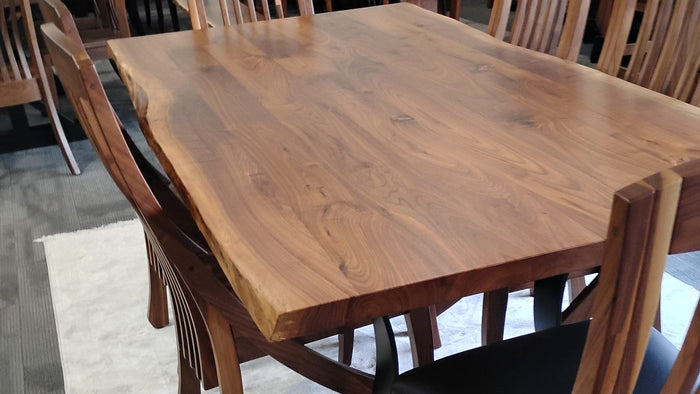
Every tabletop gets scratched and worn. What matters is what happens next. A solid wood top can be sanded down and refinished, because the same wood runs all the way through. A top made of a thin wood layer over a composite core allows only light touch-ups, and damage to the core is hard to fix. Our guide to solid wood vs veneer vs MDF shows how to tell them apart in a store.
Wood moves, and good furniture allows for it
Wood takes on moisture from the air. The USDA Forest Products Laboratory's Wood Handbook explains that below a certain moisture level, wood swells as it gains moisture and shrinks as it loses it, and that "this shrinking and swelling can result in warping, checking, and splitting." The same handbook notes that moisture changes "can be retarded, but not prevented, by protective coatings such as varnish, lacquer, or paint."
That is why the way a top, back or panel is put together matters as much as the wood itself. When you shop, ask how a piece allows for this movement. Two construction details you will see on our own product pages:
- Breadboard ends. A board set across the end of a top. Seven of our product pages list them, including the Dawson Creek Table and the Kingston bedroom pieces.
- Tongue-and-groove backs. Boards that interlock along their edges. Six of our hutch pages list a tongue-and-groove back as a feature or an option, such as the Bowerston Hutch.

Which joints and drawer details should you look for?
Pull out a drawer before you look at anything else. Drawers get opened every day and loaded with weight, so their construction tells you a lot about the rest of the piece.
Dovetailed drawers
A dovetail is, in Merriam-Webster's words, "a joint between two pieces (as of wood) formed by a wedge-shaped part that fits tightly into a wedge-shaped slot in the other piece." The wedge-shaped parts fit tightly together at the corner, right where a drawer front takes the pull every time you open it. Look at the corner where the drawer front meets the side: you should see the fan-shaped pins and tails.
Of the 3,546 active product pages on our site, 1,461 mention dovetailed drawers or dovetail joints.
Drawer bottoms and slides
The bottom of a drawer carries everything in it. On 204 of our product pages, all from one of our builders, Millcraft, the listing specifies ½-inch thick drawer bottoms, as on the Williamsport Chest of Drawers.
Slides matter too. A drawer that runs on a good slide doesn't drag wood on wood. Our product pages mention full-extension slides on 1,072 pieces and soft-close drawers or hinges on 448.
Load-bearing parts
Find the parts that carry weight and ask what they are made of. On a bed, that is the side rails: six of our Millcraft bed pages list solid hardwood side rails.
A maker's mark
Some builders sign their work, which gives the next owner a record of who made the piece and when. The Bordeaux Blanket Chest page, for example, lists "Signed and dated by the craftsman," along with an aromatic cedar bottom and an anti-slam hinge on the lid.

What finish holds up for generations?
A finish gives wood its color, protects the surface and makes it easy to clean. The Wood Handbook's chapter on finishing says that for wood used indoors, "appearance and a cleanable surface are generally most important." It also lists how long a finish will likely last as one of the things to weigh when you choose one.
Finishes on our product pages vary by builder and style. Seven pages in the Lynnwood line, for example, show a natural hand-rubbed oil finish, while 1,584 pages show the piece with a stain. Ask how the finish you pick should be cleaned and cared for, and whether it can be touched up later.
Does heirloom furniture have to look traditional?
No. Heirloom is about build quality and meaning, not style. A minimalist desk or a modern dining set can be an heirloom if it is built to last. Trends date quickly, while clean lines and balanced proportions tend to fit in as a home changes from farmhouse to modern.
Being able to choose matters here. Of our 3,546 product pages, 3,299 offer a choice of wood species, and the typical page offers 12. Because most of our furniture is made to order, you can pick the wood, stain and hardware that fit your home now, and that the next owner is likely to appreciate too. Our wood guide compares the species, and custom furniture requests are welcome.

How do you care for furniture so it lasts generations?
Museum and historic-site conservators care for furniture that has already lasted generations, and their advice works at home. The North Carolina Division of State Historic Sites lists improper handling as one of the main causes of damage, and sudden changes in humidity as another: when humidity falls, "wood shrinks and splits," and when it rises, wood can swell and make drawers and doors jam.
- Keep the room steady. Keep pieces away from heat sources, air vents and returns, and out of direct sunlight. Shades, curtains or UV window film help near windows.
- Lift, don't drag. Take out drawers before moving a piece, lift with two people for big items, and lift chairs by the seat and rails, not the back.
- Dust gently with a clean, soft, dry cloth, and only when you can see dust.
- Protect the top. Put a barrier under objects on the surface and wipe spills. A spill of wine can mark a polished finish quickly because of the alcohol.
- Skip silicone polishes. Polishes with solvents and silicones can leave a cloudy film over time. The same guide recommends a traditional paste wax without silicone, applied sparingly every few years.
- Keep it level and unstacked. Make sure the piece sits level so it doesn't warp, and don't stack furniture in storage.
The National Park Service adds that paste wax belongs only on stable clear finishes, never bare wood, and that a wax layer that still buffs to a sheen doesn't need more.
How can you tell if a piece is heirloom quality before you buy?
Use this list in a store or on a product page:
- What is each part made of: top, sides, back, drawer fronts and drawer bottoms?
- How are the drawer corners joined? Can you see dovetails?
- How thick are the drawer bottoms, and what slides do the drawers run on?
- How does the top or back allow for the wood to move with the seasons?
- What finish is on it, how should it be cleaned, and can it be touched up later?
- Who built it? Is it signed, dated or documented?
- Will you still like it in another room, or another house?
Pieces whose pages list these details
 Williamsport Chest of Drawers
 Bordeaux Blanket Chest
 Dawson Creek Table
 Kingston High Dresser
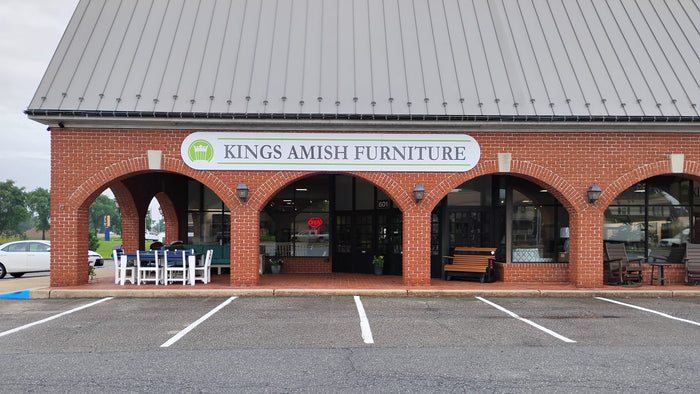
See the full Williamsport Collection, browse our dressers and dining tables, or come see the pieces in person at one of our three showrooms in Intercourse and Lancaster, Pennsylvania, and Murrells Inlet, South Carolina.
Frequently asked questions
What does heirloom quality furniture mean?
It means furniture built to be handed down: solid materials that can be repaired and refinished, joints and drawers that hold up to daily use, and a design that people still want years later.
What is the difference between an heirloom and an antique?
An antique is mainly about age. An heirloom is defined by being passed down in a family. A piece can be one without the other, and a new piece can become an heirloom.
Is Amish furniture heirloom quality?
Our furniture is handcrafted by Amish craftsmen, and many of our product pages list the details covered here, such as dovetailed drawers and drawer slides. Judge each piece on its own: read the product page and open the drawers.
Can modern furniture be heirloom furniture?
Yes. Style doesn't decide it. A modern or minimalist piece built from solid wood with sound joinery can last just as long as a traditional one.
Should you refinish an heirloom piece?
Not as a first step. A worn but sound finish can often be cleaned and protected with paste wax. If the wood itself is scratched or worn through, solid wood gives you the option to sand and refinish it.
Sources
- Merriam-Webster: heirloom
- Merriam-Webster: dovetail
- USDA Forest Products Laboratory, Wood Handbook, Chapter 4: Moisture Relations and Physical Properties of Wood
- USDA Forest Products Laboratory, Wood Handbook, Chapter 16: Finishing Wood
- North Carolina Division of State Historic Sites: Caring for Your Furniture
- National Park Service, Conserve O Gram 7/2: Waxing Furniture and Wooden Objects
- Product pages on kingsamishfurniture.com (construction details as listed in November 2026)
How we made this guide: we read the construction details on all 3,546 active product pages on our site and counted how dovetails, drawer bottoms, slides, backs, tops and maker's marks are described, then checked definitions, wood movement, finishing and care guidance from Merriam-Webster, the USDA Forest Products Laboratory, the North Carolina Division of State Historic Sites and the National Park Service. Every fact was checked against our product pages.
See it in person
Visit our showrooms in Intercourse and Lancaster, PA, and Murrells Inlet, SC. Open Monday to Friday 10 to 5, Saturday 9 to 5.