Best Material for Outdoor Furniture: Poly vs Wood vs Metal
 By Michael King, Owner

For most porches and patios, poly lumber is the easiest outdoor furniture material to live with. It doesn't rot, rust or need paint. Decay-resistant wood such as teak or cedar looks classic but needs regular care. Aluminum is light and resists corrosion. Steel and iron are strong and heavy, but rust once their coating wears.
Key takeaways
- There is no single best material for every yard. The right one depends on your climate, how much upkeep you want, how windy your spot is and whether pieces stay out all year.
- Poly lumber is solid HDPE plastic. Our outdoor page says it resists moisture, fading, insects, splintering and warping, and doesn't need sealing, staining or painting.
- Wood outdoors only lasts when it's a decay-resistant species, and only the heartwood counts. The USDA Forest Products Laboratory rates maple and hickory as slightly or nonresistant to decay.
- Aluminum protects itself with a thin oxide film. Iron and steel rust when moisture and oxygen reach bare metal, and salt air speeds that up.
- Near the coast, look at the metal parts too: hardware, glider mechanisms and swing chains.
What is the best material for outdoor furniture?
The best material is the one that matches how you'll actually use the furniture. Ask yourself four questions before you shop:
- Will it stay outside all year? If you don't want to haul chairs into the garage every fall, choose a material made to be left out.
- How much upkeep will you really do? Some materials need a fresh coat of finish every few seasons. Others need a rinse with a hose.
- Is your spot windy or near salt water? Light furniture moves in the wind, and salt air is hard on iron and steel.
- Do you want to move it often? Heavy pieces stay put. Light pieces are easier to rearrange.
Here is how the three main families of materials compare. If you're mainly deciding between poly and wood, our guide to poly lumber outdoor furniture goes deeper on that one choice.
| Question | Poly lumber (HDPE) | Wood | Metal |
|---|---|---|---|
| Main weakness outdoors | Moves slightly with heat; a little more give than hardwood | Decay, insects and weathering, depending on species and finish | Rust on iron and steel once the coating is damaged |
| Upkeep | Brush, rinse, mild soap and water (our outdoor page) | Regular cleaning and refinishing to keep its color | Touch up chips on painted or coated steel and iron |
| Weight | Heavy for its size | Varies by species | Aluminum is light; steel and iron are heavy |
| Feel in sun and cold | Color is part of the board | Natural feel | Bare metal can get hot or cold to the touch, so most sets use cushions |
| Good fit for | Low-upkeep porches, decks and patios | Owners who like the look and don't mind the care | Light, movable sets (aluminum) or classic heavy pieces (iron) |
Is poly lumber good for outdoor furniture?
Yes, for most people who want furniture that can stay outside. Poly lumber is high-density polyethylene (HDPE), a plastic, formed into solid boards. Our outdoor furniture page explains that ours is made from recyclable post-consumer plastic such as milk and detergent bottles, cleaned to a purity of over 99% HDPE and compounded into solid board stock. It is then milled into furniture using many of the same techniques traditional woodworkers use.
The same page lists what it holds up against: moisture, fading, insects, splintering and warping. It also says the color uses UV pigment systems meant to limit breakdown from sun and weather, and that you don't need to seal, stain or paint it. Two of our product pages say it plainly: the 6' Rectangular Picnic Table "can be left outside all year long," and the Grandpas Rocker "can be left out on your deck all year."
Where poly is different
Poly is not wood, and it doesn't behave like wood. The USDA Forest Products Laboratory notes that wood moves mostly with moisture, while most plastics move mostly with temperature. Poly furniture stays put after a wet week but can grow and shrink slightly between a cold morning and a hot afternoon. It also has a little more give than hardwood, which is why solid frames and good supports matter.
Poly is heavy, and that helps
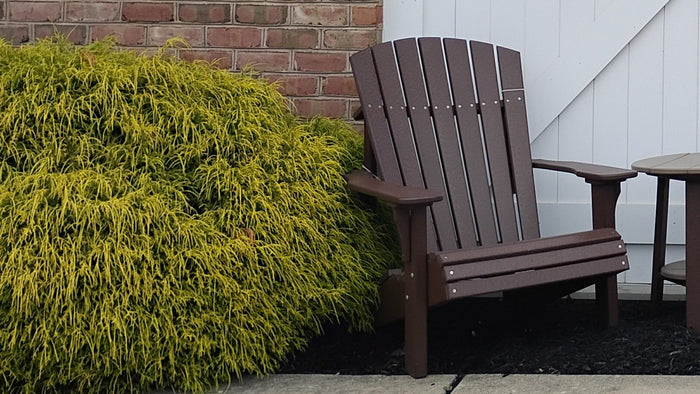
Poly pieces weigh more than many people expect. On our product pages, the Adirondack chairs that list a weight run from 31 pounds for the compact Lakeside Adirondack Chair to 52 pounds for the Deluxe Adirondack Chair. The 2' Adirondack Swivel Glider is listed at 94 pounds and the picnic table at 258. That heft makes a breezy deck less of a worry, though it also means moving a piece takes two people.

What is the best wood for outdoor furniture?
If you want real wood outside, the species matters more than anything else. The USDA Forest Products Laboratory's Wood Handbook groups woods by how well their heartwood resists decay:
- Resistant or very resistant: cedars, white oaks, black walnut, old-growth redwood and old-growth teak, among others.
- Moderately resistant: Douglas-fir, young-growth redwood and young-growth teak.
- Slightly or nonresistant: maples, hickories, ashes, birches and most pines.
Two details catch people out. First, the rating applies only to heartwood. The Wood Handbook says untreated sapwood of essentially all species has low resistance to decay. Second, much of today's lumber is second-growth, and University of California Agriculture and Natural Resources points out that it is often less decay-resistant than old-growth wood of the same species. The Wood Handbook adds that decay resistance may be lower in warm, humid climates.
That is why the beautiful hardwoods used for dining tables and dressers are poor choices for an open deck. Maple and hickory, for example, sit in the lowest decay group. Our indoor furniture is solid American hardwood and our outdoor furniture is poly, and that split is on purpose. A covered, screened porch is a different story from a spot that takes rain and sun every day.
What wood outdoors asks of you
Even decay-resistant wood weathers. Left alone, most woods turn gray over time. Keeping the original color means cleaning and refinishing on a schedule, and checking for loose joints as the wood swells and shrinks with the weather.
Is metal outdoor furniture a good choice?
It can be, as long as you know which metal you're buying. "Metal" covers very different materials.
Aluminum
Britannica explains that aluminum resists corrosion because a hard, tough oxide film forms on its surface in air, and that the film stops growing once it forms. Aluminum is also light, about one-third the weight of steel. That makes aluminum sets easy to move and store. The flip side is that light chairs can shift or tip in strong wind, so many owners stack or secure them before storms.
Steel and wrought iron
Steel and iron are strong and heavy, and iron has a classic look. Their weak point is rust. Britannica describes rust as iron reacting with oxygen in the presence of moisture, and notes that salt water and polluted air speed the process up. Paint, powder coating and galvanizing work by keeping moisture and oxygen away from the metal, so a chip or scratch that reaches bare metal is where rust starts. Owners of steel and iron furniture should plan on touching up chips.
Stainless steel
Stainless steel forms its own stable protective film, which Britannica groups with aluminum's as among the most protective. That is why you see stainless steel used for hardware and chains on outdoor furniture, even when the furniture itself is made of something else.

What outdoor furniture material is best near the beach?
Salt air is the toughest test. Because salt speeds up rust, bare or poorly coated iron and steel are the riskiest choice by the water. Aluminum, poly lumber and decay-resistant woods all handle coastal air better, each with the trade-offs above.
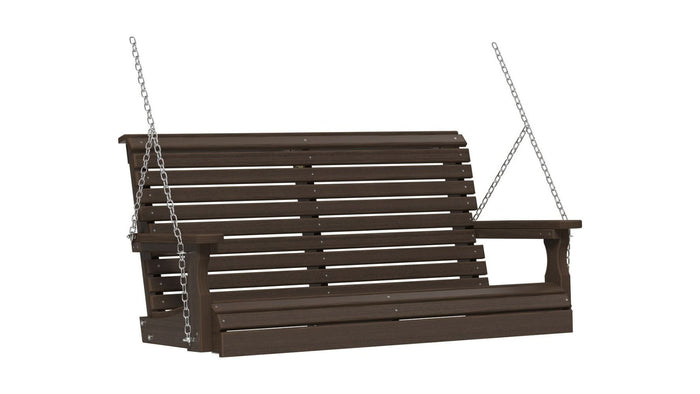
Whatever the main material, check the small parts. Screws, bolts, glider mechanisms and swing chains are usually metal even on a poly or wood piece. Our 4' and 5' porch swings, for example, come standard with stainless steel chain, as their product pages note. Before you buy anything for a coastal home, ask what the hardware is made of.
How long does outdoor furniture last?
It depends mostly on the material and the care it gets. A few patterns hold true:
- Poly lumber is made to be left outside, and two of our product pages say the pieces can stay out all year. Care is a brush, a hose and mild soap and water for tougher spots, with no strong cleaners or harsh chemicals.
- Wood lasts longest when it is a decay-resistant heartwood, kept off the ground, cleaned and refinished on a schedule.
- Aluminum resists corrosion on its own, so the frame usually outlasts its straps, slings or cushions.
- Steel and iron last when their coating stays intact. Touch up chips before rust spreads.
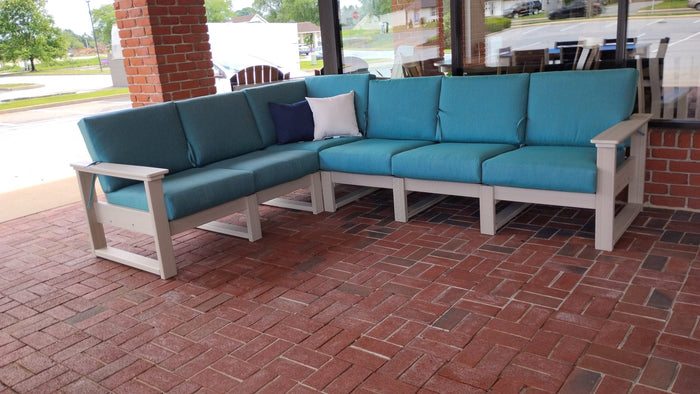
Cushions are their own question for every material. Fabric and foam wear faster than frames, so plan where they'll go during long rainy spells and over winter.

How to choose the right material for your space
Use this quick guide:
- You want to set it and forget it: poly lumber. See our outdoor furniture collection for chairs, tables, gliders and benches.
- You love the look of natural wood and enjoy upkeep: a decay-resistant species such as teak or cedar, with a finish plan.
- You need to move furniture often or store it in a shed: aluminum.
- You want a heavy, classic look and live away from salt air: coated steel or wrought iron, with touch-ups.
- You want a porch swing: look at the swing and the chain or hanging hardware together. Our outdoor swings list their chain on each product page.
Choosing a style next? Our guide on how to choose an Adirondack chair covers seat height, size and gliders.
Poly outdoor pieces made to stay outside
 2' Adirondack Swivel Glider
 5' Plain Swing
 6' Rectangular Picnic Table
 Grandpas Rocker
Frequently asked questions
Is poly better than wood for outdoor furniture?
For low upkeep, usually yes. Poly lumber doesn't need sealing, staining or painting and resists moisture and insects. Wood can last outdoors too, but only decay-resistant heartwood, and it needs regular cleaning and refinishing.
Does aluminum outdoor furniture rust?
Aluminum doesn't rust the way iron and steel do. Britannica explains that it forms a tough oxide film in air that protects it from further corrosion. Steel screws or parts attached to an aluminum frame can still rust.
Can I leave poly furniture outside in winter?
Poly lumber is made to stay outdoors. Our 6' Rectangular Picnic Table and Grandpas Rocker product pages both say they can be left outside all year. Bring cushions in for the season.
Is teak good for outdoor furniture?
Teak heartwood is decay-resistant. The USDA Forest Products Laboratory rates old-growth teak as very resistant and young-growth teak as moderately resistant, so the source of the wood matters. Like other woods, it turns gray outdoors unless it is refinished.
Can I put indoor hardwood furniture on a porch?
We don't suggest it for a spot that gets rain or direct sun. Hardwoods like maple and hickory are rated low for decay resistance, and indoor finishes aren't made for the weather. A fully enclosed, dry porch is a different case.
Sources
- USDA Forest Products Laboratory, Wood Handbook (FPL-GTR-282, 2021): Chapter 14, Biodeterioration of Wood (decay resistance of heartwood)
- University of California ANR Publication 8144: Selecting Lumber and Lumber Substitutes for Outdoor Exposures
- Britannica: Aluminum, properties and use
- Britannica: Iron oxide (formation and rusting)
- Britannica: How Does Metal Rust?
- Britannica: Metallurgy, corrosion resistance
- Kings Amish Furniture: Outdoor Furniture (poly lumber material and care)
- Product pages on kingsamishfurniture.com (as listed in November 2026)
- Our showroom team's experience with customers (2026)
How we made this guide: we took the wood decay ratings from the USDA Forest Products Laboratory and UC ANR, the metal facts from Britannica, and compared them with the material, care and weight details on our outdoor page and the outdoor product pages linked above (as listed in November 2026), adding the questions customers bring to our showrooms.
See it in person
Visit our showrooms in Intercourse and Lancaster, PA, and Murrells Inlet, SC. Open Monday to Friday 10 to 5, Saturday 9 to 5.