Poly Lumber Outdoor Furniture: What It Is and How It Holds Up
 By Michael King, Owner

POLYWOOD is a brand name, and the material behind it is poly lumber: solid boards of high-density polyethylene (HDPE), the same plastic used for milk jugs and detergent bottles. Recycled plastic is cleaned, melted into board stock and then cut and built into furniture. It doesn't need sealing, staining or painting, and it is made to stay outdoors.
Key takeaways
- POLYWOOD is one company's brand. "Poly lumber" is the general name for the material, and several makers build furniture from it. The outdoor furniture on our site is from LuxCraft.
- Poly lumber is HDPE, plastic resin code 2. Our outdoor page says ours is cleaned to over 99% HDPE before it is turned into boards.
- It resists moisture, fading, insects, splintering and warping, so most of the work wood needs outdoors goes away.
- It is not wood. It moves with heat rather than with moisture, and it has a little more give, which is why good designs use solid supports and sturdy hardware.
- Care is simple: brush off dirt, rinse with a hose, and use mild soap and water for tougher spots.
What is POLYWOOD made of?
POLYWOOD furniture, and poly lumber furniture in general, is made of high-density polyethylene, usually shortened to HDPE. Britannica describes polyethylene as the most widely used plastic in the world and HDPE as its strong, stiff, highly crystalline form, used for bottles, pails and appliance housings. The U.S. Environmental Protection Agency lists HDPE bottles for milk and water among the most common plastic containers.
That is where much of the raw material comes from. Our outdoor furniture page explains it this way: the poly is a recyclable plastic made from post-consumer waste such as milk and detergent bottles. It is cleaned in a decontamination process to a purity of over 99% HDPE, then compounded into solid board stock.
So when someone asks "is POLYWOOD real wood?", the honest answer is no. It looks like painted lumber from a few feet away, and it is cut and assembled much like wood, but there is no wood in it.
Is POLYWOOD a brand or a type of material?
It is a brand. POLYWOOD is a company that says it was founded in 1990 in Syracuse, Indiana, and that it was the first to make outdoor furniture from recycled plastics. Furniture Today reported that its two founders started by turning shredded milk jugs from a local recycling center into all-weather lumber, first for piers and boat docks and then for Adirondack chairs.
Because the brand became so well known, many people now say "polywood" for any furniture made from poly lumber, the way people say "Kleenex" for tissues. Other makers build with the same kind of material under their own names. The outdoor collection we carry is made by LuxCraft, and each of our outdoor furniture product pages names LuxCraft as the maker. If you are shopping by brand, compare the pieces themselves, not the word on the tag.
How is poly lumber furniture made?
The process has three main steps:
- Collect and clean. Recycled HDPE, much of it from household bottles, is sorted and cleaned. Our outdoor page says the material is cleaned to over 99% HDPE.
- Form boards. The clean plastic is compounded, with color and UV stabilizers, into solid board stock. Our outdoor page describes "advanced UV pigment systems with high color stability" meant to limit breakdown from sun and weather.
- Build the furniture. The boards are milled and assembled using many of the same techniques traditional woodworkers use. Our outdoor page says this furniture is made in the USA.
HDPE is also very hard to glue; Wikipedia's entry on the material notes that HDPE joints are usually welded instead. On a poly chair, the screws, bolts and other hardware holding the boards together are part of its build quality, not just a detail.

How does poly lumber hold up outdoors?
This is where poly earns its place on a porch. Our outdoor page lists resistance to moisture, fading, insects, splintering and warping, the problems that wear down wood and wood composites left outside. It also says the material is resistant to moisture, so you don't need to seal, stain or paint it.
Two of our product pages say it plainly: the 6' Rectangular Picnic Table "can be left outside all year long," and the Grandpas Rocker "can be left out on your deck all year." For many owners that is the whole point: no hauling chairs into the garage every fall.
How it moves
Every outdoor material moves a little. The USDA Forest Products Laboratory puts it simply: wood shrinks and swells a lot with moisture but very little with temperature, and the opposite is true of most plastics. Wood furniture outside swells after a wet week. Poly furniture stays put in the rain but grows and shrinks slightly between a cold morning and a hot afternoon. Well-made poly pieces are designed for that.
How it feels
Poly lumber is rigid, but it has a little more give than hardwood. One of POLYWOOD's founders told Furniture Today that boards can only run so long before that give becomes too much. In practice, look for thick boards, solid frames and supports under long seats and tabletops, not long unsupported spans.
Poly lumber vs wood outdoor furniture
If you are deciding between the two for a porch or patio, this is the short version.
| Question | Poly lumber (HDPE) | Wood left outdoors |
|---|---|---|
| Does it need sealing, staining or painting? | No. Our outdoor page says you don't need to seal, stain or paint it. | Yes. POLYWOOD itself points out that traditional wood furniture needs sanding, painting or staining. |
| What makes it move? | Temperature (USDA Forest Products Laboratory) | Moisture (USDA Forest Products Laboratory) |
| Insects and rot | Resists insects and moisture (our outdoor page) | Depends on the wood and the finish |
| Color | Pigment is part of the board, with UV stabilizers | Comes from the wood and its stain, and weathers over time |
| Cleaning | Hose, mild soap and water | Gentle cleaning plus finish upkeep |
Wood still makes sense indoors. Our indoor furniture is solid American hardwood, and our guide to types of wood for furniture explains how the hardwoods differ. Outside, poly takes the weather so you don't have to keep refinishing.

Is POLYWOOD (or any poly lumber furniture) worth it?
For most people who want furniture to live outside all year, yes, with a few honest caveats.
Why it is worth it: you skip the sanding, staining and sealing that wood needs outdoors, it resists moisture and insects, and the color is part of the material. It is also a good use of recycled plastic.
What to weigh:
- It is plastic. If you want the feel and grain of real wood, poly won't give you that. Some buyers decide on wood for a covered porch and poly for an open deck.
- Not all poly furniture is the same. Two chairs can be made of the same HDPE and still differ a lot in board thickness, frame design and hardware.
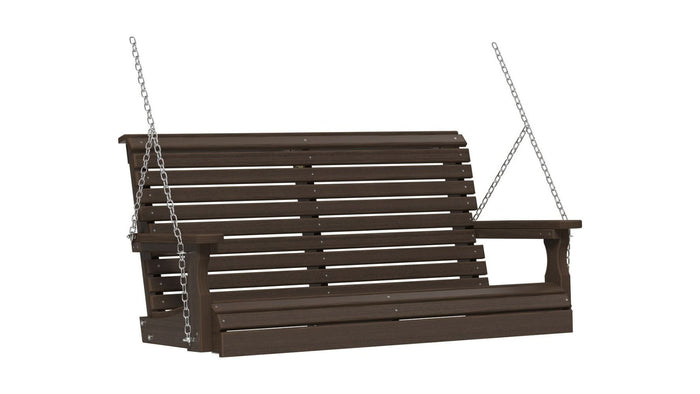
- Moving parts matter most. On gliders and swivel chairs, the mechanism is what you use every day. On swings, look at the chain. Each of the six porch swings on our site, like the 4' Adirondack Swing, lists stainless steel chain as standard.
What should you look for when buying poly outdoor furniture?
- The material named clearly. Look for HDPE or poly lumber in the description, not just "resin" or "all-weather."
- UV-stabilized color. The color should be built into the board, with UV stabilizers, so it holds up in full sun.
- Sturdy hardware. Check what the screws, chains and swivel bases are made of, especially near salt air.
- A test sit. Seat height, depth and back angle vary a lot. Our outdoor seating includes Adirondack chairs, gliders, swivel chairs and rockers, and they feel different.
- Color in daylight. Look at the real color samples outside if you can. Screens and indoor light change how poly colors read.
You can browse porch swings, outdoor tables and poly accents such as planters and side tables to see how the same material is used across the line.
How do you clean poly outdoor furniture?
Our outdoor page gives the routine we recommend:
- Brush away dirt and debris.
- Rinse with a garden hose.
- For tougher stains, mix mild soap and water, scrub gently and rinse well.
- Avoid strong cleaners and harsh chemicals.
That's it. There is no finish to renew, so cleaning is the whole maintenance plan. If you also have wood furniture indoors, our furniture care guide covers that side.
Poly lumber pieces from our outdoor collection
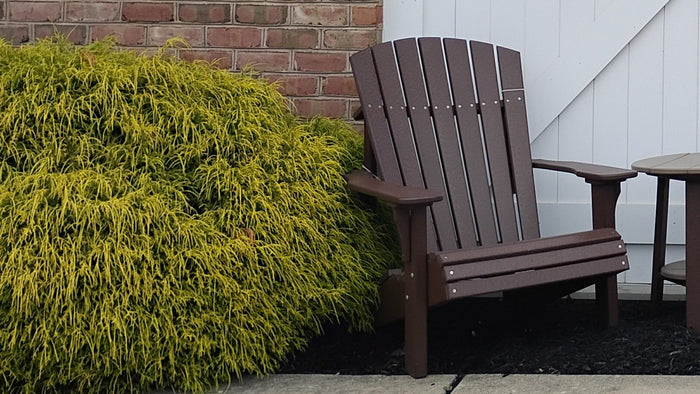
 Deluxe Adirondack Chair
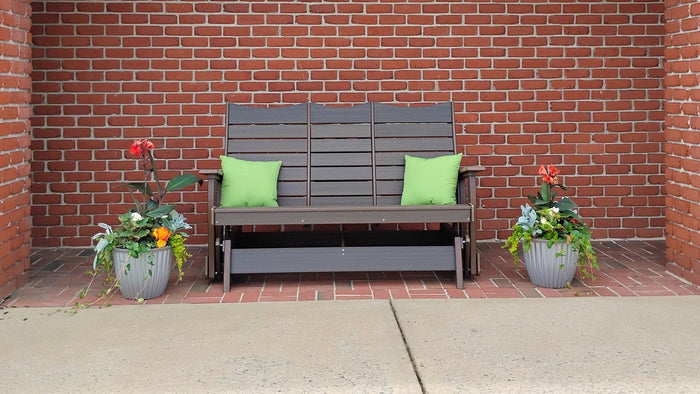
 2' Classic Swivel Glider
 4' Adirondack Swing
 6' Rectangular Picnic Table
Frequently asked questions
Is POLYWOOD real wood?
No. POLYWOOD and other poly lumber furniture is made of high-density polyethylene, a plastic. It is milled and built much like wood, but it contains no wood.
Is poly lumber the same as plastic?
Yes. Poly lumber is solid board stock made from HDPE plastic. Our outdoor page says ours comes from recycled bottles cleaned to over 99% HDPE.
Can poly furniture stay outside in winter?
It is made to. Our product pages say the 6' Rectangular Picnic Table can be left outside all year long and the Grandpas Rocker can be left out on your deck all year.
Does poly outdoor furniture fade?
Poly lumber is made with UV stabilizers to limit fading. Our outdoor page lists resistance to fading among the material's main benefits.
Do you sell POLYWOOD?
No. POLYWOOD is a separate brand. The outdoor furniture on our site is made by LuxCraft from poly lumber. You can see some of it in person outside our Lancaster showroom, or call us at 717-259-3842 with questions.
Is poly lumber recyclable?
HDPE is commonly recycled and carries resin identification code 2. Our outdoor page describes our poly as a recyclable plastic.
Sources
- Encyclopaedia Britannica: Polyethylene
- U.S. EPA: Plastics, Material-Specific Data
- Wikipedia: High-density polyethylene
- USDA Forest Service, Forest Products Laboratory: Fungal and Moisture Durability of Wood-Plastic Composites (FPL-GTR-303, 2024)
- POLYWOOD: Genuine POLYWOOD (company history)
- Furniture Today: Pioneers of recycled plastics (2011)
- Kings Amish Furniture: Outdoor Furniture (material and care)
- Product pages on kingsamishfurniture.com (as listed in November 2026)
- Our showroom team's experience with customers (2026)
How we made this guide: we took the material facts from Britannica, the EPA and the Forest Products Laboratory report linked above, the brand history from POLYWOOD and Furniture Today, and the care steps from our own outdoor page, then checked the swing, picnic table and rocker pages linked in this guide for what they say about chains and year-round use.
See it in person
Visit our showrooms in Intercourse and Lancaster, PA, and Murrells Inlet, SC. Open Monday to Friday 10 to 5, Saturday 9 to 5.